Siyyid ‘Alí-Muhammad of Shíráz, 1819-1850, was a Persian merchant who declared Himself a Manifestation of God, heralding a new religious era and preparing humanity for a greater One to come, "Him Whom God Shall Make Manifest" (Baháʼu'lláh), the founder of the Baha'i Faith. He assumed the Arabic title Báb which means the Gate, signifying His role as the door to a new Revelation and the promised Qá'im of Islam. Thus the Báb was the spiritual forerunner of the Baha'i Faith, just as John the Baptist was the forerunner of Christianity. His proclamation 23 May 1844 started the Bábí movement which gradually unfolded its true nature not as a new sect of Islam but a new chapter in the Cause of God. The Báb brought revolutionary teachings for spiritual renewal, social reform (especially women's rights), the importance of science and reason, universal unity, and challenged corrupt clergy and traditions. During His brief ministry, it is estimated that nearly 100,000 people followed His teachings. For most of His ministry He was either put under house arrest or in prison. He was executed in 1850 in spectacular manner by the combined force of clergy and Persian government. Between 20,000 and 30,000 of His followers-men, women and children-were martyred in heinous ways. He fulfilled numerous prophecies of the world's religions and made prophecies for the coming of Him Whom God Shall Make Manifest-which were fulfilled to the letter. The Báb left us with about five million words of revelation, mostly revealed in Arabic, and mostly for the purpose of guiding His followers to Baháʼu'lláh.
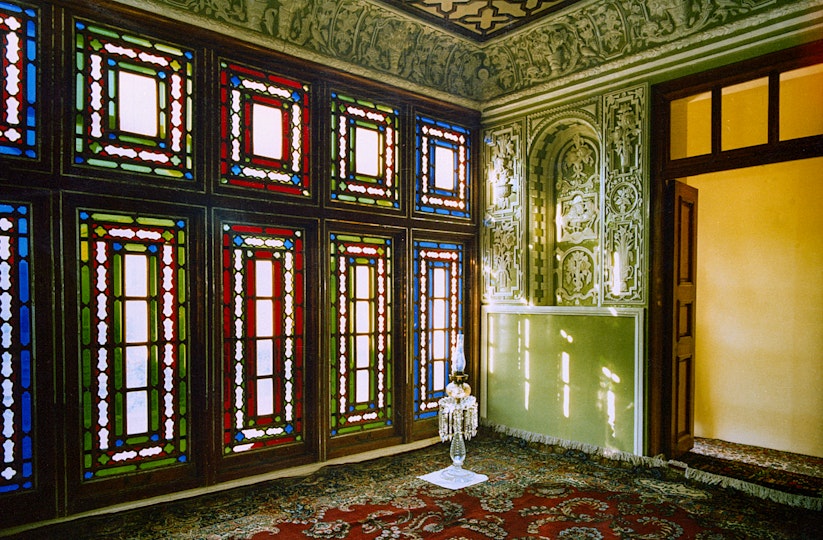
Room where the Báb declared His mission May 23, 1844
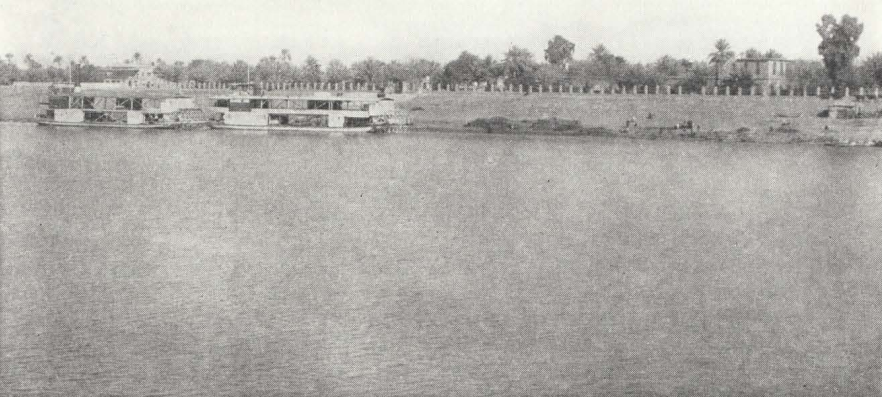
View of the riverside of the Garden of Riḍván, Baghdád, ‘Iráq, as seen from the right bank of the Tigris. Bahá'u'lláh declared His mission in this garden.
Baháʼu'lláh
Mírzá Husayn-ʻAlí of Tehran, 1817-1892, born to a wealthy nobleman, declared Himself a Manifestation of God in fulfillment of the promises of not only the Báb but fulfilling prophecies of all the world religions. He assumed the title Baháʼu'lláh, Arabic for "Glory of God" and founded the Baháʼí Faith, a new divine revelation centered on the oneness of humanity, oneness of religion, one God, advocating spiritual and social progress, equality, global justice, unity and peace and transformation of individuals and society to become a unified global civilization.
Brief History
Baháʼu'lláh showed signs of greatness at an early age, intellectual brilliance and wisdom notwithstanding not attending school, compassion, and extreme generosity, becoming a prominent respected figure.
At 27, he became a follower of the Báb immediately upon perusing a single verse of the Báb's writings. He worked tirelessly to teach the people about the Báb and suffered at the hands of opposition. After the Báb and his followers were executed, Baháʼu'lláh was tortured and imprisoned in the pestilent Black Pit of Tehran for four months and expected to die there, and all His vast wealth was confiscated; His homes plundered. Instead, in that horrible pit, He received His divine calling and Revelation (mid October, 1852). After His innocence was proven He and immediate family were exiled from his native Iran, first to Baghdad (Ottoman Iraq) with a tortuous winter journey. People flocked to visit Him and receive His wisdom and insights. Under pressure from the Persian government desiring to eliminate His influence, the Ottoman Sultan ordered His transfer to the capital, Constantinople (Istanbul). Before departure, Baháʼu'lláh declared Himself, announcing that He is indeed the One promised by the Bab and the Promised One of all ages, in the rented garden He named Ridván (over 12 days in April 1863, celebrated annually as the Most Great Festival). He was further exiled to Adrianople (Edirne, where the followers took on the term Bahá’í, followers of the Glory), and finally to the prison-city of Akka (Acre) in Palestine to silence Him forever, clearly, a failed policy. After the death of the Sultan, officials in Akka who came to greatly love and admire Him pleaded with Baháʼu'lláh to leave the prison, that no-one wished Him to be confined. And so He departed for the nearby countryside, still technically a prisoner yet victorious over two empires, and free to devote His remaining time to complete His Revelation. He passed away in 1892 in Akka, where His shrine is a site of pilgrimage.
Message of Bahá'u'lláh
The message of Bahá'u'lláh is shared throughout this website and many others. It can be inadequately summarized as a call for the unification of the world through recognizing the oneness of humanity, reconciling the religions, teaching that they are as chapters of one book of God, establishing justice, equality, reciprocity and cooperation, particularly equality of women and men, proclaiming equality of all people without limitations of race, nationality, social standing; eschewing conflict and contention; harmony of science and religion and faith with reason; universal education; universal peace; essentially a call to LOVE with very practical considerations. His teachings provide a blueprint for an ever-advancing adaptive global civilization, aiming to spiritually uplift humanity and resolve conflict through justice and love. He shows what individuals need for their spiritual well-being, educating us about the purpose of life-to know, worship and love God; to acquire the virtues of God for the betterment of the world and our selves which prepares us for our eternal spiritual existence-and our responsibility to work for the betterment of the world to advance human civilization. He revealed over six million words of Revelation, about half in Arabic and half in Persian. Through the nearly forty year ministry, He produced many significant works including the preeminent Kitáb-i-Aqdas (Most Holy Book, revealed in 1873 while imprisoned in Akka), Kitáb-i-Íqán (Book of Certitude) revealed in Baghdad 1861. He wrote to the Kings and Rulers of the world admonishing their behavior, calling upon them to abandon war and focus on the good of their people, and calling for them to accept His Revelation and establish peace, and warned them that their power would be taken away if they did not heed. All but one scoffed Him. All but one had their kingdoms taken away (e.g. Napoleon III, Kaiser Wilhelm I, Tsar Alexander II, Emperor Franz Joseph, Sultan Abdu'l-Aziz, Pope Pius IX, Nasiri'd-Din Shah) even as some scoffed about how a prisoner tries to command the kings. It was unimaginable that these kingdoms would fall, yet, all fell. The one who did not scoff was Queen Victoria and hers is the only kingdom among them which endures today. Baháʼu'lláh explained the Covenant of God: that God always sends the Manifestations of God (known in other faiths as Prophets, Messengers, Saviors, Law-givers, Enlightened Ones, Avatars, etc.) with His guidance, and in turn, humanity must recognize and obey that guidance. After Himself in one or two thousand years will come another Manifestation of God. This is long in the future. Our task now is not to worry about the distant future but to heed the divine message for today which shall result in the realization of the promised kingdom of God on earth, a glorious world civilization, and world peace.
Professor Browne meets Bahá'u'lláh
In April 1890 Professor Edward Granville Browne of Cambridge University met Bahá'u'lláh in four successive interviews. Professor Browne wrote of his first meeting: "The face of Him on Whom I gazed I can never forget, though I cannot describe it. Those piercing eyes seemed to read one's very soul; power and authority sat on that ample brow.… No need to ask in whose presence I stood, as I bowed myself before one who is the object of a devotion and love which kings might envy and emperors sigh for in vain." Bahá’u’lláh stated at that meeting: "… That all nations should become one in faith and all men as brothers; that the bonds of affection and unity between the sons of men should be strengthened; that diversity of religion should cease, and differences of race be annulled — what harm is there in this? … Yet so it shall be; these fruitless strifes, these ruinous wars shall pass away, and the 'Most Great Peace' shall come.… Let not a man glory in this, that he loves his country; let him rather glory in this, that he loves his kind." [J.E. Esslemont, Bahá'u'lláh and the New Era, pp 39-40]
'Abdu'l-Bahá
On the same night that the Bab declared His mission, the eldest son was born to Baháʼu'lláh which He named Abbas (lion), 1844-1921. Later in life Baháʼu'lláh designated him as Authorized Interpreter of the teachings, perfect Exemplar of the teachings, and Center of the Covenant, i.e. appointed Successor to Baháʼu'lláh. This ensured doctrinal purity and prevented any successful schisms in the Bahá’í Faith, a unique feature in religious history. As Exemplar, he is considered the living model of virtuous Bahá’í life with such virtues as service, humility, unwavering devotion, justice and love. He established the framework for the Baháʼí administrative order through his Will and Testament, guiding the faith's global growth and institutions. He shared decades of imprisonment with his Father, and even beyond His passing, freed for the final time by the Young Turk Revolution of 1908. He assumed the title 'Abdu'l-Bahá (servant of the Glory) to make clear that he himself is not a Manifestation of God but the perpetual servant of One.
After the passing of Baháʼu'lláh, he worked to explain and expand his Father's Faith. He championing world peace, unity, and social justice. He guided the establishment of the first House of Worship (Ashkabad, Turkenistan). He built and personally laid to rest the remains of the Báb in a Shrine at the location on Mount Carmel in Haifa (in today's Israel) indicated by Baháʼu'lláh. This Shrine today is a point of pilgrimage and great beauty in the city of Haifa. The Bahá’í World Center buildings lay in a far-flung arc beside the terraces of this Shrine. He traveled to propagate the Faith, journeying to Egypt 1910, Europe, USA and Canada, then Europe and Egypt again, returning to Haifa just prior to the beginning of WWI (which he predicted and tried to awaken the people to avoid). During those travels he was seen directly or through newspapers indirectly by over one million people. A typical headline read: Prophet of Peace from the East. He established a plan for the world-wide spread of the Faith after his return known as the Tablets of the Divine Plan which today remain the guide for the Plans of the Universal House of Justice. He filled in the intentional gaps in the Kitáb-i-Aqdas, established the faith's unique administrative order and its features, and unified the growing world community. His service to humanity knew no bounds. He helped the sick and poor, championed equality and even was knighted by the British for saving countless people in Palestine from famine during WWI (during the years before, he acquired land, brought in farmers, had them grow and store crops, and provided food from these stores to the starving people). He passed away in Haifa, 1921, having fulfilled every possible nuance to serve his Father's Faith. In his Will and Testament, he continued the Covenant by written appointment of his successors, actually the Twin Successors of the appointed Guardianship naming his grandson Shoghi Effendi (b.1897, d.1957) as the first (and as history would have it, the only) Guardian along with the elected institution, the Universal House of Justice (first elected by members of all the world's National Spiritual Assemblies in April 1963) which continues to guide the world-wide Bahá’í community today under the promise of infallible guidance and protection from Baháʼu'lláh and the Báb. 'Abdu'l-Bahá was termporarily laid to rest in a room in the Shrine of the Bab. A dedicated Shrine of 'Abdu'l-Bahá is being constructed at the edge of the old city of Akka.