The Bahá’ís of Boise comprise the most populous among several communities in a local area known as the Treasure Valley Bahá’í Cluster. The Treasure Valley cluster also includes Caldwell, Eagle, Garden City, Kuna, Meridian, Mountain Home, Nampa, the unincorporated portion of Ada County and other areas. Some of these also have their own Local Spiritual Assembly. The Treasure Valley cluster is one of about 22,000 in the world.
The Bahá’í presence in Boise is noted as a Bahá’í group in the Bahá’í World [1] volume 7 (1936-1938) which lists Mrs. Ethel Thompson as the contact person for the Bahá’í group. A group means there were fewer than nine adult Bahá’ís at that time. Once nine adults are present, a Local Spiritual Assembly can be formed. Bahá’í World volume 9 (1940-1944) acknowledges the formation of the Boise Spiritual Assembly for the first time and this Institution has continued to form annually ever since. Throughout these early volumes of Bahá’í World, numerous Boise Bahá’ís are acknowledged as pioneers—selfless Bahá’ís who uproot their lives to move elsewhere in the world for the propagation of the Faith. The Boise Spiritual Assembly was Incorporated with the Idaho Secretary of State on 2 February, 1948. The articles of incorporation were published in Bahá’í World volume 11 (1946-1950). Boise was among the first hundred incorporated Local Spiritual Assemblies in the world.
To keep up with advances in information technology, an expansive web presence was created for the Boise Spiritual Assembly in 1998, again putting it in the vanguard of communities by being among the first two hundred Bahá’í web sites in the world and prior to any web presence by either the American or International Bahá’í communities. The current website you are viewing was brought online 1 Jan 2026.
In the early 2000's there was an exploration of shifting Boise Bahá’í community activities to a central location. A small building was rented and proved the benefit of the idea. And so in 2004 a purchased house was opened as the local Bahá’í Center at 1175 S. Maple Grove Road[2], with a longer term plan of replacing the farm house with a more suitable building. In a relatively short time it became apparent that the maintenance of the property was consuming too much attention and resources of the small Bahá’í community, and so it was sold. The Bahá’í community today continues to hold activities, many in a decentralized manor as neighborhood gatherings. The larger central gatherings are held in homes that can accomodate or in temporarily rented facilities.
Notes:
1. Bahá’í World is an annual reference book with a goal of capturing significant activities and facts of the Bahá’ís of the world, first published under the supervision of the National Spiritual Assembly of the Bahá’ís of the United States and Canada. Volume 1 covered April 1925-April 1926. The latest volume, #35, spans 2006-2021. New volumes continue to be produced.
2. Original article in the Idaho Statesman is no longer available, but is archived at bahai-library
As of 2024, official Bahá’í records listed approximately nine million registered Bahá’ís. Surveys conducted by third parties such as World Christian Encyclopedia or Pew Research Center often list higher numbers of adherents than Bahá’í records. This is believable because additional people identify with the Bahá’í community even though they have not formally registered their contact information with a national community.
Bahá’ís reside in well over 100,000 localities worldwide. Among these, there are between ten and twenty thousand Local Spiritual Assemblies (annually elected institutions of nine adult community trustees).
Bahá’ís reside in every nation except two (Vatican City and North Korea).
Bahá’í writings have been translated into more than 800 languages.
The original languages of Revelation are Arabic and Persian.
English is the working language of the Bahá’í World Centre located in Haifa, Israel. The Centre is located here because Bahá'ulláh's exiles placed Him in this vicinity.
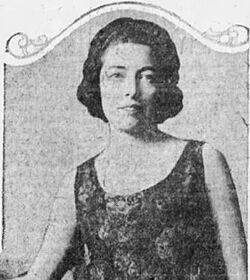
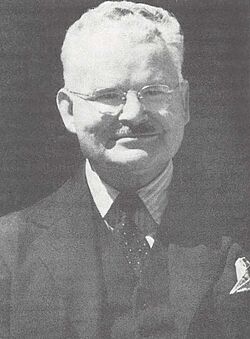
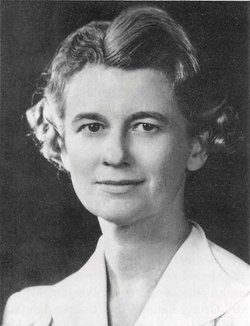
Possibly the earliest breakthrough of the Faith in Boise came in 1934 when Orcella Rexford gave a talk on the Faith to approximately four hundred people. A study class was formed, and when George O. Latimer visited the city in January 1935 he reported that the community had excellent potential.[1] In 1936 Louise Caswell spent March, April, and May in Boise to teach the Faith,[2] and by December 1936 there were two declared Bahá’ís in Boise, and they were joined by Mildred Crossey who pioneered to the city from Portland, Oregon, by securing a transfer in her work.[3] Louise Caswell returned to Boise for the first two months of 1937 to assist in teaching work.[4]
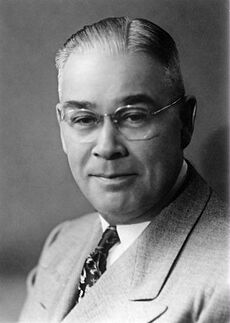
By 1938 Boise had a local Bahá’í group with an appointed secretary,[5] but the community had not grown for some time.[6] In 1942 Alta Krueger conducted an extended teaching campaign in Boise, and two youth, Farrukh Ioas and Sally Sanor, pioneered Boise in July 1942 bringing the size of the Cities [sic] Bahá’í community to six.[7][8] A resident declared shortly after their arrival bringing the total to seven. In September 1942 Leroy Ioas held an informal meeting on the Faith which was attended by twenty six.[9]
In April 1943 Boise was able to elect its first Local Spiritual Assembly, due to having at least nine adult Bahá’ís residing in the city.[10] The Assembly engaged in regular teaching, with weekly study classes and firesides being held after its formation, and several radio segments for talks being secured.[11] In 1944 a radio broadcast commemorating the Bahá’í Centenary was made on the station KIDO in Boise.[12] In 1948 the Local Spiritual Assembly of Boise was incorporated.[13]
References
1 Baha'i News (1935). National Spiritual Assembly of the Bahá’ís of the United States and Canada. No 91, Pg(s) 15.
2 Baha'i News (1936). National Spiritual Assembly of the Bahá’ís of the United States and Canada. No 103, Pg(s) 3.
3 Baha'i News (1936). National Spiritual Assembly of the Bahá’ís of the United States and Canada. No 104, Pg(s) 3.
4 Baha'i News (1937). National Spiritual Assembly of the Bahá’ís of the United States and Canada. No 107, Pg(s) 13.
5 Baha'i News (July, 1939). National Spiritual Assembly of the Bahá’ís of the United States and Canada. No 127, Pg(s) 9.
6 Baha'i News (1938). National Spiritual Assembly of the Bahá’ís of the United States and Canada. No 115, Pg(s) 20.
7 Baha'i News (July, 1942). National Spiritual Assembly of the Bahá’ís of the United States and Canada. No 154, Pg(s) 2.
8 Baha'i News (1942). National Spiritual Assembly of the Bahá’ís of the United States and Canada. No 155, Pg(s) 6.
9 Baha'i News (1942). National Spiritual Assembly of the Bahá’ís of the United States and Canada. No 157, Pg(s) 4.
10 Baha'i News (1943). National Spiritual Assembly of the Bahá’ís of the United States and Canada. No 163, Pg(s) 4.
11 Bahá’í News, No. 173, pp 9-10
12 Baha'i News (1944). National Spiritual Assembly of the Bahá’ís of the United States and Canada. No 172, Pg(s) 9.
13 Bahá’í World, Vol. 11, p 263
This website was created by J. Thomas Pawlowski on behalf of the Spiritual Assembly of the Bahá’ís of Boise and is approved by the latter, as have been several previous Boise Bahá’í web sites. While this does not mean all content is error-free or in every nuance is a flawless representation of the Bahá’í Faith, every effort is made to achieve a high standard of accuracy. If you have any questions or comments about the contents you are encouraged to contact us, see link below. The copyright is taken by an individual on behalf of the Spiritual Assembly of the Bahá’ís of Boise for the purpose of protecting against malicious reuse of content. Content on this site will expand in response to the needs of the community.